


 1



The Missing Piece in Your Relationship: Understanding Emotional Needs and Attunement
You and your partner talk every day. You make plans, you show up for each other, and on paper, things look fine. But something feels off. There’s no big fight, no obvious problem — just this quiet feeling that you’re not really connecting.
If that sounds familiar, you’re not imagining it. That feeling usually points to one thing: unmet emotional needs in a relationship.
Relationships aren’t just held together by shared routines or good communication skills. At the core, what makes a relationship feel real is whether both people feel seen, heard, and understood by each other. When that’s missing — even in small ways — love alone isn’t always enough to fill the gap.
That’s where attunement comes in.
So What Exactly Is Emotional Attunement?
Attunement is the ability to tune into your partner’s emotional state — not just what they’re saying, but how they’re feeling — and respond in a way that makes them feel understood.
It’s not about having the right answer. It’s about being present. Here’s a quick example:
Partner A: “You’re making this into a bigger deal than it is.”
Partner B: “I can tell this is bothering you. Want to talk about it?”
Both responses acknowledge the same situation. But only one of them makes the other person feel like they’re not alone in it.
Attunement is what makes the difference between a conversation that goes in circles and one that actually brings you closer.
And here’s the thing — being attuned to your partner doesn’t mean you always get it right. You’re going to misread them sometimes. What matters isn’t perfection. It’s the effort to stay curious and try again when you miss the mark. That effort, over time, is what builds real trust. Gottman’s research calls this turning toward — one of the simplest things couples can do to stay connected.
What Are Emotional Needs, Anyway?
Emotional needs are the things we need to feel safe and close to someone — and according to Psychology Today, unmet emotional needs are one of the most common reasons relationships break down. They’re not wants or preferences — they’re the baseline requirements for feeling genuinely connected in a relationship.
The most common ones look like this:
- Validation. Feeling heard and validated — not necessarily agreed with, just understood
- Affection. Physical and emotional affection that says ‘I care about you’
- Emotional safety. Feeling safe enough to be honest without fear of judgment or rejection
- Respect. Having your opinions, feelings, and limits respected
- Consistency. Knowing your partner will show up — not just when it’s convenient
When these needs are being met, a relationship feels stable. You’re more relaxed, more open, and less likely to blow up over small things.
When they’re not, the signs can be subtle at first. You might start feeling irritable for no clear reason. You might pull away without understanding why. You might find yourself wondering if you’re asking for too much.
A lot of people were raised to keep their needs to themselves. Maybe you were told you were “too sensitive,” or you learned early on that expressing a need led to conflict or rejection. Over time, that can turn into silence — not because the needs went away, but because it stopped feeling safe to voice them.
But your needs are real, and a healthy relationship has room for them.
Signs Your Needs Aren’t Being Met
Unmet emotional needs rarely show up all at once. They build slowly, through patterns you might not notice until you step back.
Here are some signs worth paying attention to:
- You feel lonely even when you’re together — conversations stay at surface level and don’t go anywhere deeper
- You’ve tried to express how you feel, but your partner doesn’t seem to get it
- The same arguments keep coming up, and nothing ever really gets resolved
- Small things bother you more than they used to — which is often a sign that something bigger is going unaddressed
- You’ve started pulling back emotionally — sometimes called emotional detachment — or even physically, without fully realizing it.
- There’s a low-grade frustration that just doesn’t go away
These aren’t signs that something is wrong with you. They’re signals that something in the relationship needs attention. Recognizing them is the first step toward doing something about it.
How to Actually Talk About What You Need
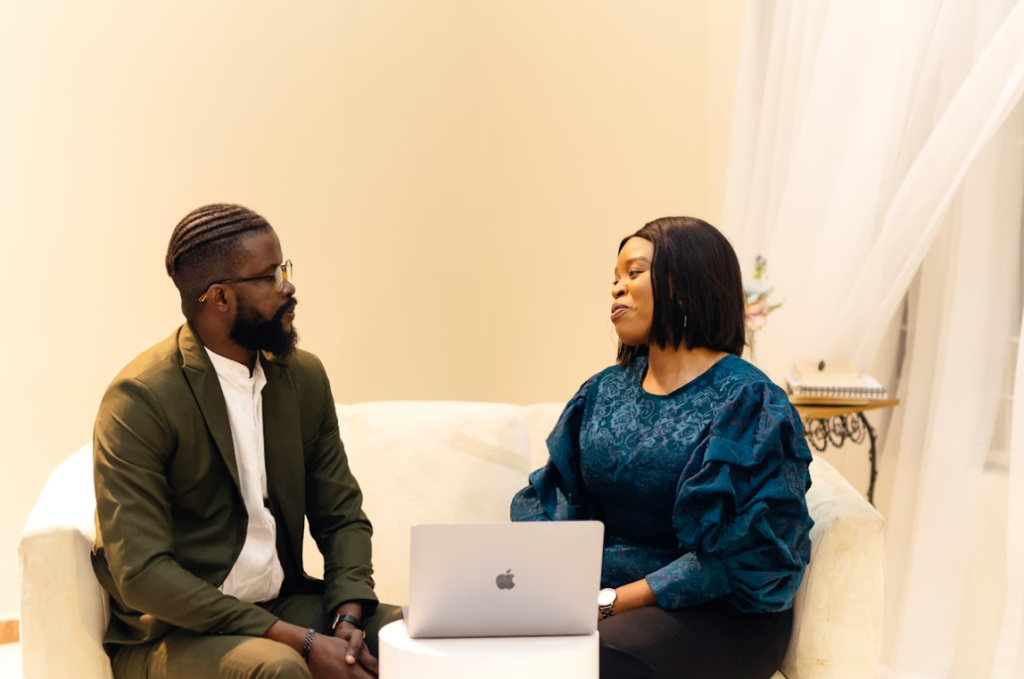
Expressing your needs to a partner can feel scary, especially if you’ve been hurt before for doing it. But it’s one of the most important skills in any relationship.
Here’s how to approach it in a way that’s more likely to land:
- Figure it out first. Know what you’re actually feeling before you start. “I don’t know, I’m just off” is hard for a partner to work with. The more specific you can get, the better.
- Use ‘I’ statements. Lead with your own experience, not a complaint about theirs. Try: “I’ve been feeling kind of disconnected lately, and I’d really love more intentional time together.” That’s much easier to receive than “You never make time for me.”
- Be specific. Vague feelings lead to vague responses. If you need more quality time, say that. If you need your partner to check in on you when you’re stressed, say that.
- Pick the right moment. Timing makes a huge difference. Don’t bring up something important when one or both of you is stressed, tired, or already in a bad mood.
- Stay open. You’re not trying to win an argument. You’re trying to understand each other. Stay curious about where your partner is coming from, too.
When this kind of conversation happens with honesty on both sides, it rarely ends in conflict. More often, it ends in relief.
Interdependence vs. Codependence: What’s the Difference?
This is a distinction that doesn’t get talked about enough.
In a codependent relationship, one or both people rely on the relationship too heavily for their sense of self. There’s a lot of emotional enmeshment — where one person’s mood dictates the other’s, where boundaries blur, and where the relationship can start to feel more like survival than choice. It might feel intense and close, but it’s often exhausting.
An interdependent relationship looks different. Both people have their own lives, their own sense of self, and their own emotional stability — and they choose to be connected from that place. They support each other without losing themselves in the process.
Key signs of a healthy, interdependent relationship:
- Both people have a strong sense of who they are, even within the relationship
- There are clear, healthy boundaries that both people respect
- Emotional responsibility is shared — not dumped on one person
- Both people feel supported without feeling suffocated
Attunement plays a big role here. When you’re genuinely tuned into each other, you can be emotionally close without becoming dependent. You grow together — and you grow as individuals at the same time. But when contempt starts creeping in, that dynamic can shift fast — here’s what contempt in relationships actually looks like.
Small Ways to Practice Attunement Every Day
Attunement isn’t a one-time conversation. It’s built through small, consistent habits over time.
A few things that actually help:
- Put your phone down and make eye contact when your partner is talking. Full presence matters more than you’d think.
- Listen to understand, not to respond. There’s a difference between waiting for your turn to talk and actually taking in what the other person is saying.
- Acknowledge their feelings, even when you see the situation differently. “That makes sense” goes a long way.
- Pause before responding when you’re upset. A few seconds of space can prevent a lot of unnecessary damage.
- Check in regularly — not just ‘how was your day,’ but ‘how are you actually doing?’
- Pay attention to the non-verbal stuff. Sometimes the most important things get communicated without words.
None of these are complicated. But done consistently, they change the whole tone of a relationship.
One Last Thing

If your relationship has been feeling distant or unsatisfying, that doesn’t mean it’s too far gone. In most cases, what’s missing isn’t love — it’s emotional connection. And connection is something you can build back.
Your needs aren’t too much. Wanting to feel understood, supported, and valued is just what it means to be in a relationship with another person.
The good news is that attunement is a skill. It can be learned. It can improve. And even small changes in how you show up for each other can shift the whole dynamic over time.
Start with one question: What’s one thing you’ve needed from your relationship that you haven’t said out loud yet?
You don’t have to fix everything at once. Just start there.
